Official store material names six building examples: living quarters, taverns, piers, cannon foundries, defensive fortifications, and the Entertainers’ Guildhall. Those names show the breadth of the haven—housing and services, maritime access, production, defense, and specialized entertainment—but the supplied evidence does not define every building, recipe, cost, or unlock condition.
This page groups the confirmed names by their plain-language purpose so they are easier to find during play. The grouping is an editorial index, not a claim about the game’s exact technology tree. Use it alongside the walkthrough and production ledger whenever a settlement question crosses from a building into vertical connections, resources, finished goods, or distribution.
Named examples
6 confirmed buildings
Terrain rule
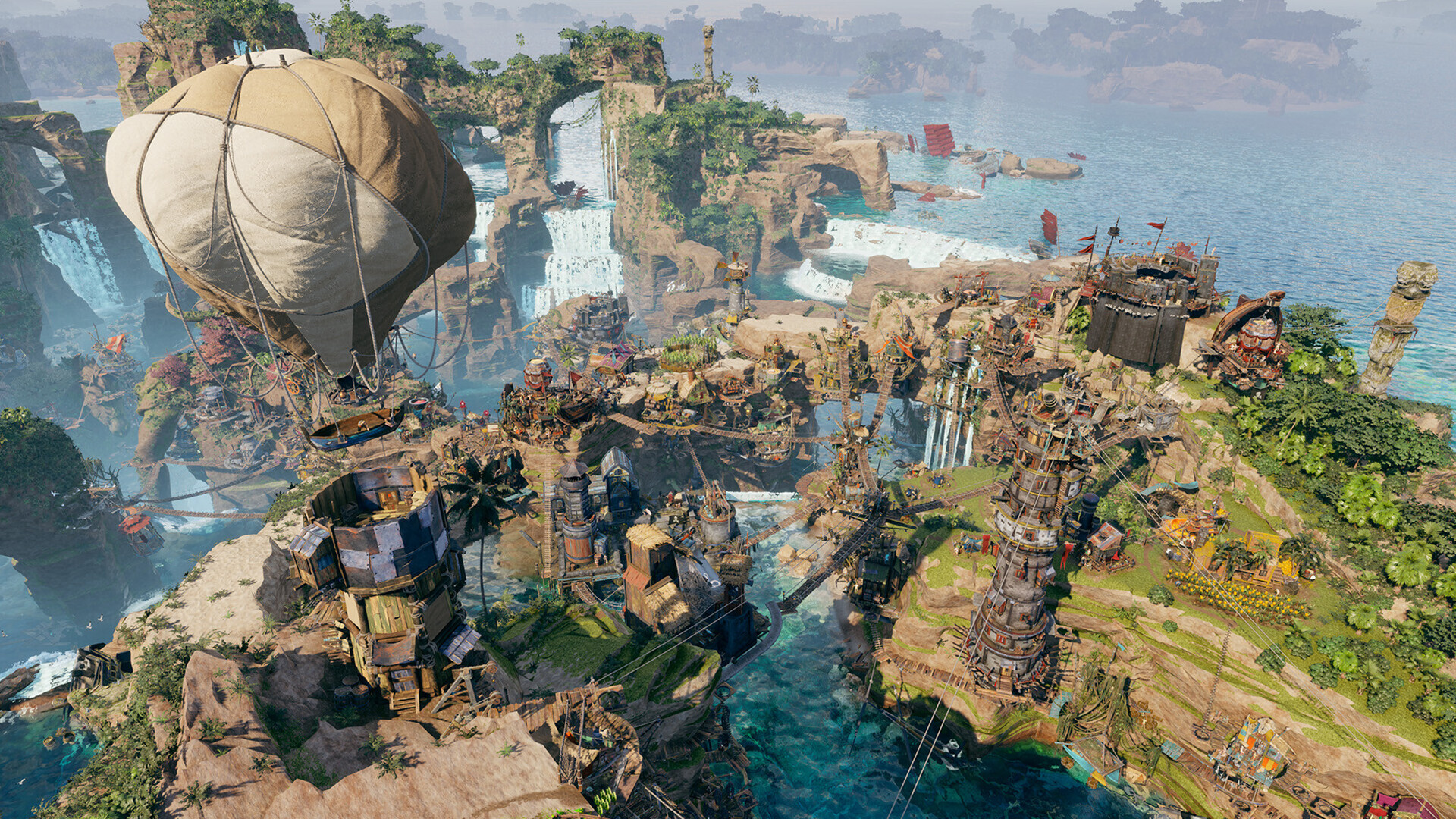
Buildings connect across cliffs
Movement
Bridges and ziplines
Economy link
Production and distribution
Sources
First-party source
Housing and services
Living quarters and taverns are explicitly named in the official building examples. Their names provide clear reference points for housing and settlement service questions, but no occupancy values, effects, costs, or upgrade levels are included in the supplied evidence. The correct use of this catalog is to recognize the building type and then inspect the game interface for current numbers rather than importing values from an unverified source.
The Entertainers’ Guildhall is also named. It belongs in the service reference because its title distinguishes it from the industrial and maritime examples, yet this page does not assign it an output, worker count, or progression requirement. When planning around these buildings, keep the vertical connection rule in view: a useful service still needs to sit inside a settlement network that connects across cliffs.
Building
Reference group
What is confirmed
Living quarters
Housing and services
The building name is listed in official store material.
Taverns
Housing and services
The building name is listed in official store material.
Entertainers’ Guildhall
Housing and services
The building name is listed in official store material.
Production
Cannon foundries are the confirmed industrial example in the supplied building list. Their name strongly identifies a manufacturing context, but the evidence provided for this stage does not include exact inputs, outputs, production time, or staffing. The Production Chains page therefore keeps its model at the supported level: materials enter processing, more than fifty types of goods are manufactured and distributed, and finished products continue toward distribution hubs.
Use the building and production pages together when tracing a bottleneck. The building catalog answers whether a named structure belongs to the confirmed reference set. The production ledger answers where that structure sits conceptually between inputs and distribution. Bridges and ziplines remain relevant because movement across height can connect or separate the parts of that chain.
Maritime access
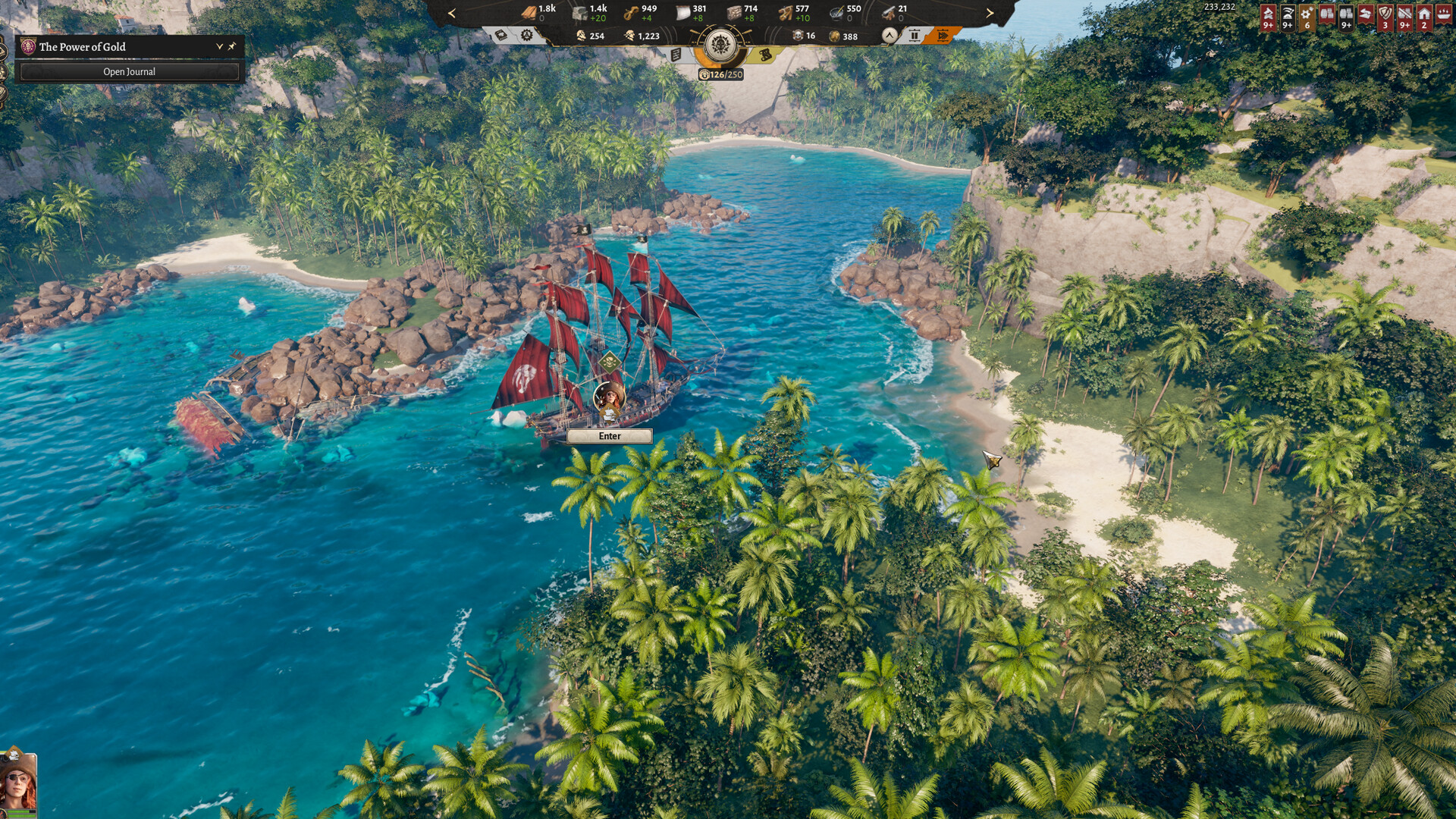
Piers are the named maritime building example. They form the clearest building-level bridge between the island settlement and the fleet, but the current evidence does not specify pier tiers, ship capacity, construction cost, or expedition limits. Those missing figures are intentionally not replaced with estimates. The Ships & Naval Expeditions page instead covers the confirmed fleet inputs: ships take captains and crew, and outcomes depend on ship, crew, captain, and tactics.
When using the catalog in play, treat a pier question as part of a larger route. Check whether the settlement connection reaches the maritime area, whether crew preparation is complete, and whether the fleet reference answers the next decision. This keeps the building page practical without turning one confirmed name into an unsupported mechanical guide.
Defense
Defensive fortifications are named in official store material, giving the settlement catalog a confirmed defensive category. Cannon foundries also have an obvious thematic relationship to armament, but this page does not claim a specific dependency between the two. No damage values, firing arcs, threat tables, or required placements are present in the supplied facts, so none are published here.
The useful reference is the boundary: defensive fortifications are part of the known building set, while exact defensive planning must be read from verified in-game information. Keep the catalog open for naming and route navigation, then return to the walkthrough for settlement order or to the progression page when the question concerns the broader Notoriety, Empire, Seafaring, and Wealth dimensions.
Official Steam screenshot · a developed settlement with buildings across multiple levels. · Hooded Horse
Frequently asked questions
Does this page list every Corsair Cove building?
No. It lists the six examples explicitly named in the supplied official store evidence: living quarters, taverns, piers, cannon foundries, defensive fortifications, and the Entertainers’ Guildhall. A complete building roster, costs, upgrades, and unlock order require verified in-game data that was not included in this handoff.
Are the building groups an official technology tree?
No. Housing and services, production, maritime access, and defense are editorial reference groups based on the plain meaning of the confirmed names and the planned content inventory. They make the page easier to scan but do not claim an official tree, dependency chain, or construction order.